
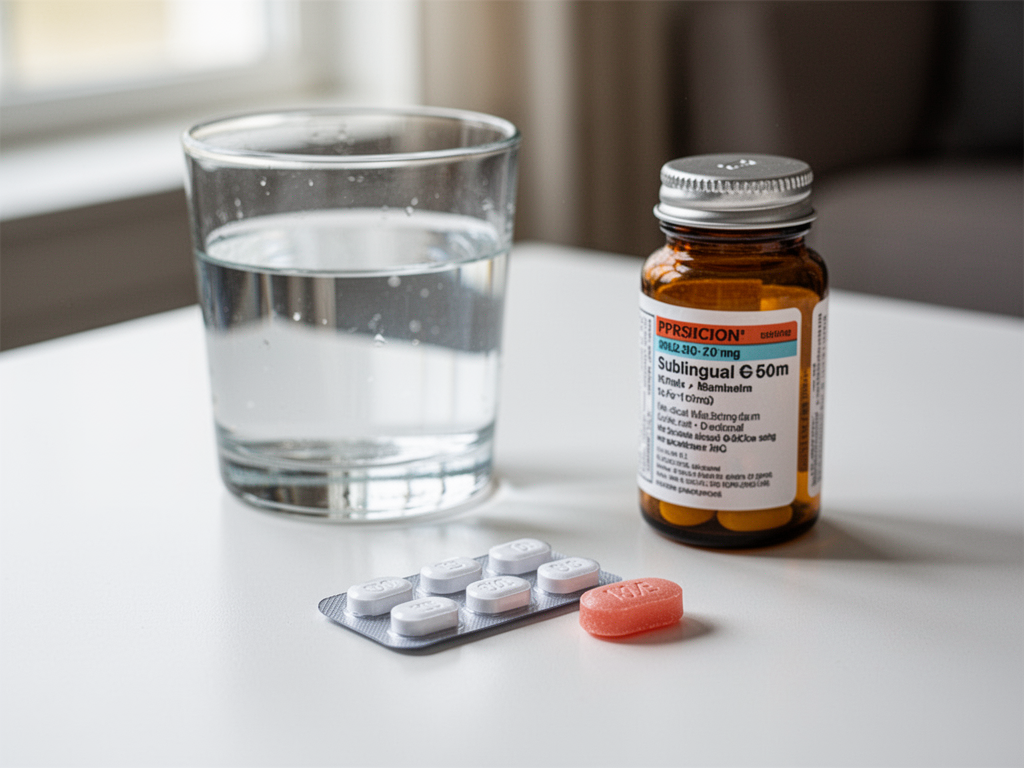
The Rise of At-Home Ketamine
In recent years, several telehealth companies have begun offering oral and sublingual ketamine formulations prescribed for at-home use. This model emerged partly in response to the COVID-19 pandemic and the broader expansion of telehealth services. While it has increased access to ketamine therapy, it has also raised important questions about safety and appropriate medical oversight.
How Oral and Sublingual Ketamine Work
Sublingual (Under the Tongue)
Sublingual ketamine — typically in the form of rapidly dissolving tablets (RDTs) or troches — is placed under the tongue and absorbed through the oral mucosa. Key pharmacological characteristics:
- Bioavailability: Approximately 25–30%, significantly lower than IV (~100%) or IM (~93%)
- Onset: Effects typically begin within 15–20 minutes
- Duration: Subjective effects last approximately 1–2 hours
- Dosing: Typically 100–400 mg, adjusted by the prescribing provider based on body weight and response
Oral (Swallowed)
When ketamine is swallowed rather than absorbed sublingually, bioavailability drops further to approximately 17–20% due to extensive first-pass hepatic metabolism. The active metabolite norketamine is produced in higher quantities with oral administration, which may contribute to sustained effects but also increases variable dosing response.
Safety Considerations
The primary safety concern with at-home ketamine is the absence of in-person medical monitoring during the treatment experience. In-clinic settings provide:
- Continuous vital sign monitoring (blood pressure, heart rate, oxygen saturation)
- Trained staff who can intervene if adverse reactions occur
- A controlled environment that minimizes fall risk and other physical dangers
- Immediate access to emergency equipment
At-home protocols attempt to mitigate these risks through various measures such as requiring a sober monitor to be present, virtual check-ins, and lower doses. However, the level of safety is fundamentally different from in-clinic administration.
FDA and Regulatory Concerns
At-home ketamine prescriptions typically use compounded formulations — medications prepared by compounding pharmacies rather than commercially manufactured products. Important regulatory context:
- Compounded medications are not FDA-approved and do not undergo the same rigorous testing for safety, efficacy, and consistency as FDA-approved drugs
- In October 2023, the FDA issued a safety alert specifically about compounded ketamine products, citing reports of adverse events including death associated with unsupervised use
- The American Society of Ketamine Physicians, Psychotherapists & Practitioners (ASKP3) and other professional organizations have published guidelines emphasizing the importance of appropriate medical oversight
In-Clinic vs. At-Home: Key Differences
| Factor | In-Clinic (IV/IM) | At-Home (Oral/Sublingual) |
|---|---|---|
| Medical monitoring | Continuous, in-person | Remote or self-monitored |
| Bioavailability | 93–100% | 17–30% |
| Dose precision | High (weight-based, titrated) | Variable absorption |
| Evidence base | Extensive RCT data | Limited controlled studies |
| Cost per session | $400–$800 | $100–$300/month |
| Convenience | Requires clinic visits | Home-based |
Who Might Consider At-Home Ketamine
At-home ketamine may be considered when:
- In-clinic treatment is genuinely inaccessible due to geography, mobility limitations, or cost
- The prescribing provider conducts thorough evaluation, maintains regular follow-up, and coordinates with the patient's mental health team
- The patient has a reliable monitor present during each session
- The patient understands the differences in safety profile compared to in-clinic treatment
Questions to Ask Before Starting At-Home Ketamine
- What is the prescriber's clinical background and experience with ketamine?
- How will my treatment response be monitored and assessed?
- What emergency protocols are in place if I have an adverse reaction?
- Is the prescriber coordinating with my existing mental health provider?
- What compounding pharmacy is being used, and what quality controls do they follow?
This article is for informational purposes only. Discuss all treatment options with a qualified healthcare provider who can evaluate your individual needs.