
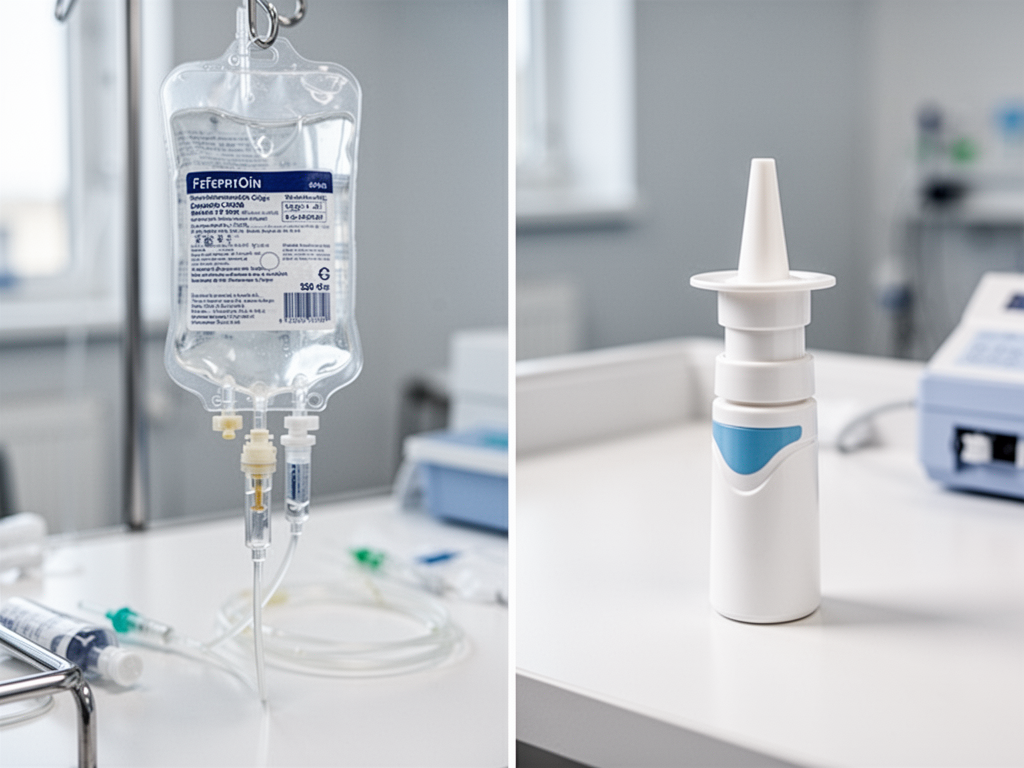
Two Approaches, One Mechanism
Both IV ketamine and Spravato (esketamine) target the glutamate system through NMDA receptor antagonism, but they differ in formulation, regulatory status, and clinical application.
The Chemistry: Racemic Ketamine vs. Esketamine
- Racemic ketamine (IV infusions): A 50/50 mixture of S-ketamine and R-ketamine, used in medicine since 1970 and in most depression research.
- Esketamine (Spravato): The isolated S-enantiomer, with approximately 3-4 times greater affinity for the NMDA receptor than the R-enantiomer.
Emerging research suggests R-ketamine may also contribute to antidepressant effects through distinct mechanisms, though this remains an active area of investigation.
Administration and Bioavailability
| Factor | IV Ketamine | Spravato |
|---|---|---|
| Route | Intravenous infusion | Intranasal spray |
| Bioavailability | ~100% | ~48% |
| Typical dose | 0.5 mg/kg over 40 min | 56 mg or 84 mg fixed |
| Dose titration | Precise, individualized | Fixed-dose only |
| Onset | Minutes | ~20 minutes |
| Monitoring | ~1-2 hours | 2+ hours (REMS) |
FDA Regulatory Status
Spravato is FDA-approved for treatment-resistant depression (2019) and MDD with acute suicidal ideation (2020).
IV ketamine is FDA-approved as an anesthetic but used off-label for psychiatric and pain conditions. Off-label prescribing is legal, ethical, and common when supported by clinical evidence.
Clinical Evidence Comparison
IV ketamine has a larger body of independent academic research dating to 2000. Spravato was evaluated in Phase III TRANSFORM and SUSTAIN trials with mixed but overall positive results.
A 2024 non-inferiority trial (Correia-Melo et al., NEJM) found IV racemic ketamine to be non-inferior — and potentially superior — to intranasal esketamine for remission at Day 8. More head-to-head comparisons are needed.
Cost and Insurance Coverage
- Spravato: Typically covered by insurance since it is FDA-approved. Out-of-pocket costs with insurance may range from $0-$250/session.
- IV ketamine: Generally not covered by insurance for psychiatric indications. Patients typically pay $400-$800 per infusion out of pocket.
Which Option Is Right for You?
The choice depends on diagnosis, treatment history, insurance coverage, and clinical availability. This decision should be made with a qualified healthcare provider who can evaluate your individual circumstances.
This article is for informational purposes only. Treatment decisions should be made with a qualified healthcare provider.