
Safety Questions Deserve Direct Answers
Most patients considering ketamine therapy have heard something alarming — bladder damage in recreational users, addiction risk, memory problems, FDA warnings about at-home products. Between 2023 and 2026, several systematic reviews and regulatory actions addressed these concerns specifically in the context of supervised therapeutic dosing, which is a very different exposure profile from recreational use.
Here is what that research found, including where it remains inconclusive.
Bladder and Urinary Effects
Ketamine-induced cystitis is well documented among heavy recreational users, who may take grams per day for years. The question is whether therapeutic dosing carries similar risk.
Kerr-Gaffney and colleagues (Journal of Psychopharmacology, 2025) systematically reviewed 27 studies, 24 of them in depressive disorders. Findings:
- Urological symptoms were reported in 0% to 24.5% of patients across studies, with increased urinary frequency the most common
- Symptoms were predominantly mild to moderate
- Risk appears low under medical supervision at therapeutic doses
The critical caveat: median follow-up across included studies was only about four weeks, and most relied on passive adverse event reporting rather than systematic urological assessment. The authors concluded that current evidence is insufficient to guarantee long-term bladder safety of maintenance therapy. If you are on an ongoing maintenance protocol, urinary symptoms are worth reporting promptly rather than tolerating.
Dependence and Addiction Risk
Ingrosso and colleagues (Journal of Psychopharmacology, January 2025) reviewed 16 studies covering 2,174 patients treated with ketamine for depression, including randomized trials, open-label studies, retrospective series, and case reports. Only four studies showed clear signs of tolerance or dependence.
The authors concluded that addiction risk appears low with supervised dosing, while noting an important methodological gap: none of the included studies used validated quantitative dependence scales. The practical safeguards remain standard — a prescriber who controls the supply, a defined treatment course, and screening for personal or family history of substance use disorder.
Cognitive Effects
Concerns about memory largely stem from ECT comparisons and from heavy recreational use. Therapeutic-dose research is reassuring so far:
- A 2025 secondary analysis of the ELEKT-D trial (Journal of Clinical Psychiatry, n = 365) found cognitive performance was better after ketamine than after ECT immediately following a three-week course, with no significant between-group differences among responders at 1, 3, and 6 months
- A 2023 study of 66 patients with treatment-resistant depression receiving serial infusions found improvements in working memory and processing speed after four infusions, with processing-speed gains persisting at five weeks
- A 2025 comparative safety meta-analysis in Frontiers in Pharmacology covering 47 studies of ketamine and esketamine found no significant abnormalities in liver function tests, cognitive measures, or addiction-related assessments for either drug
Improvement in cognitive scores may partly reflect relief of depression itself, since depression impairs concentration and processing speed. Either way, there is no signal of therapeutic-dose cognitive harm in this literature.
Where the Real Risk Concentrates: Unsupervised Use
Regulators have been consistent on this point. On October 10, 2023, the FDA warned patients and providers about compounded ketamine products, including oral formulations, for psychiatric use. Key points from that communication:
- Ketamine is not FDA-approved for any psychiatric disorder (only esketamine nasal spray is, for treatment-resistant depression and depressive symptoms in MDD with acute suicidal ideation)
- Compounded products are not evaluated by the FDA for safety, effectiveness, or quality
- At-home use without monitoring carries risks of sedation, dissociation, changes in vital signs, respiratory depression, and bladder or urinary toxicity
- The FDA stated it is not aware of evidence that compounded ketamine is safer, more effective, or faster-acting than approved options
In mid-2026 the FDA followed with a batch of warning letters to online sellers marketing unapproved and misbranded ketamine directly to consumers, citing significant risks in the absence of medical supervision — including serious infection risk with injectable products obtained outside the medical system.
Meanwhile, large telehealth cohorts report low adverse event rates: a 2024 analysis of 11,441 patients receiving at-home, telehealth-supervised sublingual ketamine (Journal of Affective Disorders) found adverse events in 3.0% to 4.8% of patients and serious adverse events in under 0.1%. That study was industry-funded, open-label, and had no control group, so it speaks to feasibility rather than proving equivalence with in-clinic care.
What Proper Monitoring Looks Like
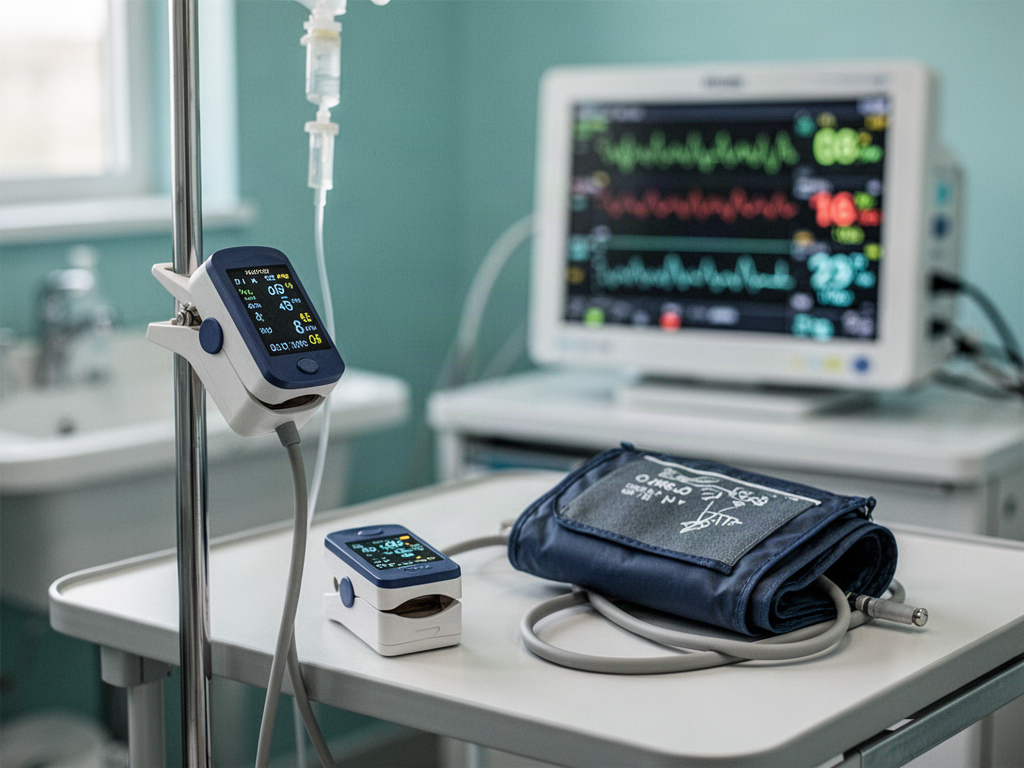
Professional guidance has converged on monitored administration for parenteral ketamine. Consensus guidelines developed through a Delphi process among ketamine practitioners, published in the Journal of Affective Disorders in 2026, reached strong agreement that treatment should occur in settings capable of cardiorespiratory monitoring. The American Society of Anesthesiologists similarly advises that IV, IM, or subcutaneous ketamine for mental health indications be given only in monitored settings with rescue equipment available.
For esketamine, the REMS program makes this a legal requirement: administration in a certified healthcare setting with a minimum two-hour post-dose observation period, and no take-home dispensing. A 2025 REMS modification added a pulse oximetry requirement for certified settings.
Questions worth asking any clinic
- Who is physically present during the infusion, and what are their credentials?
- What vital signs are monitored, and with what equipment?
- What is the protocol for a hypertensive episode, severe nausea, or acute distress?
- How are urinary symptoms, cognition, and mood tracked across a maintenance course?
- What is the plan for tapering or stopping treatment?
Our candidacy and contraindications guide covers pre-treatment screening in more depth, and you can compare clinics by state to evaluate monitoring practices before booking a consultation.
Sources
- Kerr-Gaffney J, et al. Urological symptoms following ketamine treatment for psychiatric disorders: A systematic review. J Psychopharmacol. 2025. PubMed 40583492
- Ingrosso G, et al. Is there a risk of addiction to ketamine during the treatment of depression? A systematic review. J Psychopharmacol. 2025. PubMed 39529949
- FDA. Compounded Ketamine Products, Including Oral Formulations, for the Treatment of Psychiatric Disorders. October 10, 2023. fda.gov
- Mathai DS, Hull TD, Vando L, Malgaroli M. At-home, telehealth-supported ketamine treatment for depression. Journal of Affective Disorders. 2024;361. doi:10.1016/j.jad.2024.05.131
- American Society of Anesthesiologists. Guidance on the Safe Use of Ketamine Outside of Acute Pain Management and Procedural Sedation. asahq.org