
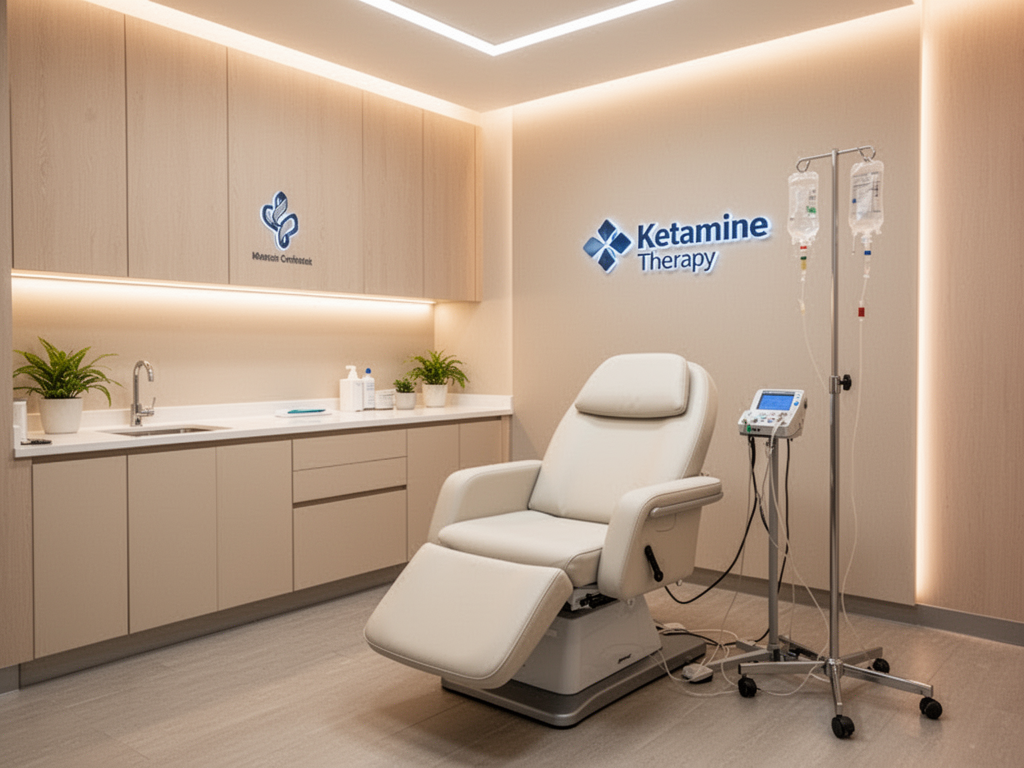
What Is Ketamine?
Ketamine is a dissociative anesthetic that was first synthesized in 1962 and approved by the FDA in 1970 for use as an anesthetic agent. For decades, it has been widely used in emergency medicine, surgery, and pediatric anesthesia due to its favorable safety profile and unique property of maintaining respiratory drive.
In the early 2000s, landmark research by Berman et al. (2000) and Zarate et al. (2006) demonstrated that sub-anesthetic doses of ketamine could produce rapid antidepressant effects — often within hours — in patients with treatment-resistant depression. This discovery catalyzed a new era of psychiatric research and clinical practice.
How Ketamine Works: Mechanism of Action
Unlike traditional antidepressants that primarily target monoamine neurotransmitters (serotonin, norepinephrine, dopamine), ketamine acts primarily as an NMDA receptor antagonist, blocking glutamate — the brain's most abundant excitatory neurotransmitter — from binding to NMDA receptors.
This blockade triggers a cascade of downstream effects:
- AMPA receptor activation: Increased glutamate signaling through AMPA receptors leads to the release of brain-derived neurotrophic factor (BDNF).
- mTOR pathway stimulation: BDNF activates the mechanistic target of rapamycin (mTOR) signaling pathway, which promotes synaptogenesis — the growth of new synaptic connections.
- Synaptic plasticity restoration: In conditions like depression and PTSD, chronic stress can cause synaptic atrophy in the prefrontal cortex and hippocampus. Ketamine appears to rapidly reverse this damage by promoting new dendritic spine formation.
This neuroplasticity-based mechanism explains why ketamine can produce effects within hours, compared to the weeks or months required by traditional antidepressants.
FDA-Approved vs. Off-Label Use
It is important to distinguish between FDA-approved and off-label applications of ketamine:
- FDA-approved (Spravato/esketamine): In March 2019, the FDA approved esketamine nasal spray (Spravato) for treatment-resistant depression in adults, and later expanded approval for major depressive disorder with acute suicidal ideation or behavior. Spravato must be administered under medical supervision through a certified REMS program.
- Off-label IV ketamine: Intravenous racemic ketamine is used off-label for depression, anxiety, PTSD, OCD, chronic pain syndromes, and suicidal ideation. Off-label use is legal and common in medicine, but it means the specific indication has not undergone the full FDA approval process.
Available Administration Routes
Ketamine therapy is delivered through several routes, each with different bioavailability, onset times, and clinical contexts:
- Intravenous (IV): The most studied route with ~100% bioavailability. Typical dose: 0.5 mg/kg over 40 minutes. Allows precise dose titration.
- Intranasal (Spravato): FDA-approved esketamine nasal spray with ~48% bioavailability. Fixed dosing of 56 mg or 84 mg per session.
- Intramuscular (IM): ~93% bioavailability. Faster administration than IV; commonly used in some clinics as an alternative.
- Sublingual/oral: Lower bioavailability (~25-30%), sometimes used for at-home maintenance dosing under physician supervision.
Who May Benefit from Ketamine Therapy
Based on current evidence, ketamine therapy is most commonly considered for:
- Adults with treatment-resistant depression (typically defined as failure of two or more adequate antidepressant trials)
- Individuals experiencing acute suicidal ideation requiring rapid intervention
- Patients with PTSD, anxiety disorders, or OCD who have not responded adequately to first-line treatments
- Certain chronic pain conditions including CRPS, neuropathic pain, and fibromyalgia
Ketamine therapy is not a first-line treatment and is typically reserved for patients who have not responded to conventional approaches.
Safety Considerations
When administered in a clinical setting with appropriate monitoring, ketamine therapy has a well-established safety profile. Common side effects include:
- Dissociation and perceptual disturbances (typically resolve within 1-2 hours)
- Nausea (manageable with anti-emetics)
- Transient increases in blood pressure and heart rate
- Dizziness and drowsiness
Serious adverse events are rare when proper screening, monitoring, and dose protocols are followed. Contraindications include uncontrolled hypertension, active psychosis, and untreated substance use disorders.
This article is for informational purposes only and does not constitute medical advice. Always consult a qualified healthcare provider before making treatment decisions.